Don’t Move by Chance: The Quiet Industry Shaping How Cities Move
How advanced manufacturing is redefining mobility, sustainability, and urban resilience.
In economies undergoing rapid transformation, meaningful change rarely begins with end products. It starts with the systems behind them. At the center of these systems are industries that may appear conventional at first glance, yet increasingly sit at the intersection of advanced manufacturing, sustainability, and the future of mobility.
Among them, the manufacturing of buses and transport solutions is quietly taking on a new strategic role. It is no longer defined solely by vehicle output, but by engineering, design, and production capabilities that shape how cities move.
In the United Arab Emirates, this shift is becoming more pronounced.
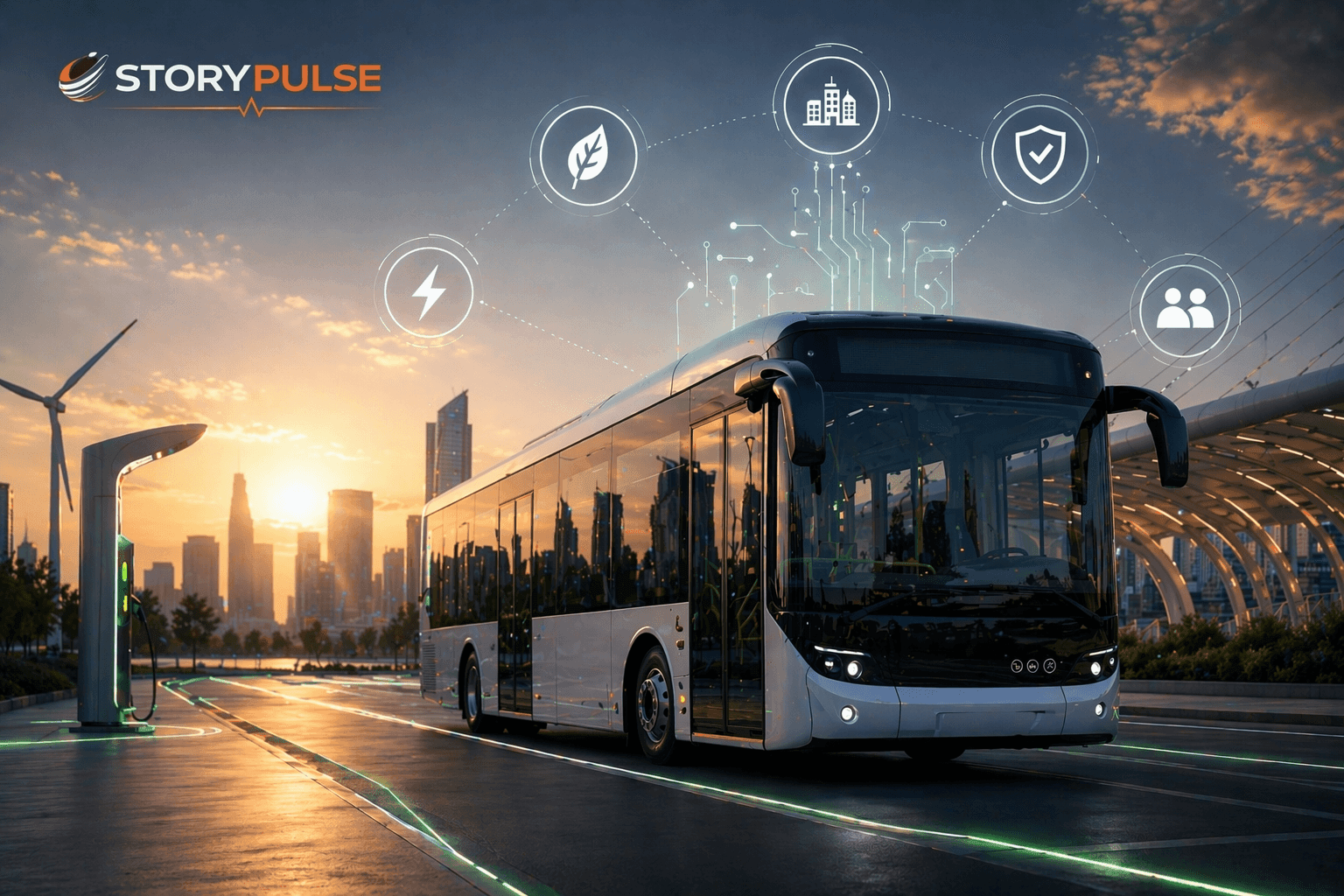
Companies in this space are moving beyond traditional builds, developing buses that incorporate advanced materials such as aluminum, while also investing in electric models designed with safety, performance, and long-term environmental considerations in mind. The direction is not simply technological. It reflects a broader transition: turning transport vehicles into integrated engineering platforms that support more sustainable urban systems.
The value of this sector, therefore, is not measured by the number of units produced, but by its contribution to building transport ecosystems that are more efficient, less energy-intensive, and aligned with long-term environmental goals.
As the focus on smart cities intensifies, the role of transport manufacturing is being redefined. It is no longer about delivering a means of movement, but about designing a core component within a wider urban framework, one that connects infrastructure, technology, and evolving patterns of daily life.
In that context, a bus is no longer just a manufactured product. It becomes a scalable engineering solution. Not just a vehicle, but a functional layer within a broader system concerned with efficiency, sustainability, and quality of life.
Yet despite this evolution, the sector is often still understood through a narrow lens, centered on the final product rather than the industrial and technological depth behind it. That gap in interpretation presents a clear opportunity.
Reframing these companies should not begin with specifications, but with their role in enabling the transition toward more sustainable transport systems, and in supporting cities as they expand without proportionally increasing their environmental footprint.
Ultimately, investing in this sector is not simply about supporting an existing industry. It is about participating in the construction of the infrastructure that will define how cities move in the years ahead.
The question is no longer how to improve transport.
It is how to redesign it from the ground up to meet the demands of a more efficient and sustainable future.
Not when they need marketing.
But when they need to be understood.
We usually meet organizations
at the moment their growth outpaces their communication
Startups trying to explain what they actually do
Family businesses moving from reputation to positioning
ICV suppliers needing to be understood beyond procurement lists
Technology companies whose value is lost in technical language
That is usually when communication becomes a business decision.
Not a marketing activity.
So what actually changes
When communication becomes
a business decision?
Inside most companies,
something starts to shift.
Procurement stops asking:
"Can you supply?"
"Can we rely on you?"